Fire pump and fire alarm faults that go unnoticed between inspections
Fire systems sit idle for months, so the faults that matter are the ones nobody sees until the day the system is called on.
October 26, 2026 · 4 min read
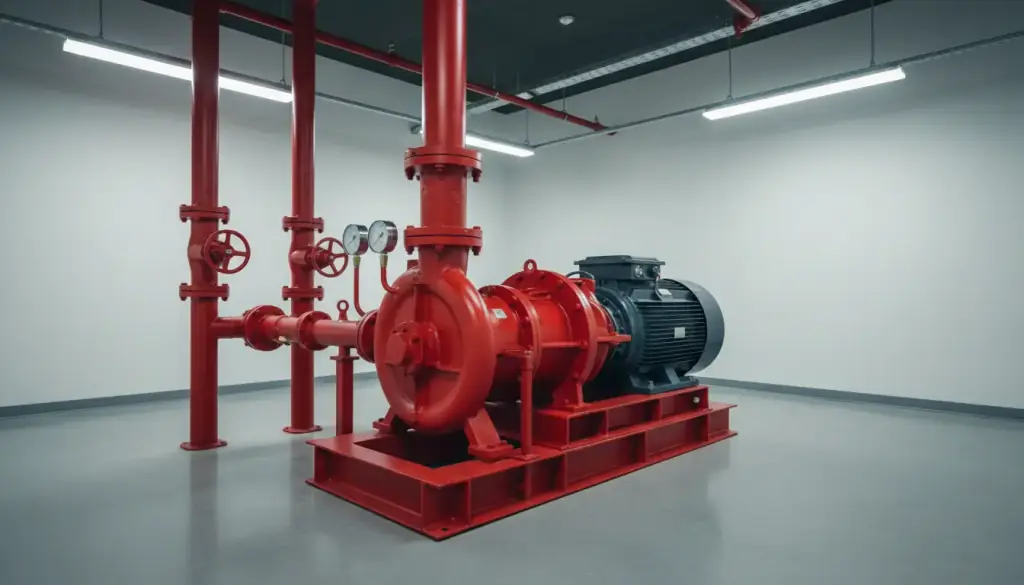
A fire pump and a fire alarm panel have one thing in common: for most of their lives nobody asks anything of them. That is the design. It is also why their problems hide. A fault that would be fixed within a day on an elevator or a chiller can sit for months on a fire system, because everything looks normal until the moment it isn't.
Scheduled inspections catch a lot. What they can't do is watch the system on the days in between. Here are the faults that tend to appear in that gap, and what a facility manager can check on a walk-round without opening anything.
In the pump room
The jockey pump is a small pump whose only job is to hold pressure in the system so the main fire pump isn't called on for every minor drop. Listen to it. If it starts and stops every few minutes, something is off. The cause can be a leak somewhere in the piping, a check valve that isn't seating, or a pressure control that has drifted. The jockey pump is covering for a problem, and wearing itself out while it does. Note how often it runs and compare month to month.
Look at the controller next. A fire pump controller has a selector or mode indicator, and the one position that matters for standby is automatic. After a test or a repair it is easy to leave the controller in manual or off. The lights are on, nothing looks wrong, and the pump will not start by itself when pressure falls. Check it every visit and write down what you saw.
Then the valves. Suction and discharge valves should be open and secured that way. A valve closed for a repair and never reopened is a classic fault, and it takes only one person with a wrench and a busy afternoon. Compare the pressure gauges with the last reading you recorded. A suction or discharge reading that has changed for no clear reason is worth a call.
Last, use your senses. Packing or seals dripping more than before, a bearing housing that is hot to the hand or noisy, a driver that smells of heat, water on the floor, a room that has quietly turned into storage. A pump room should be clear, dry and easy to get into.
At the alarm panel
The panel will tell you a lot if you read it. A trouble signal means the panel has found something it can't vouch for: a wiring fault, a device that stopped answering, a weak battery, a lost connection. In many buildings the trouble light has been on so long that nobody notices it anymore. That is the most common quiet failure there is. A latched trouble isn't a nuisance. It is a message the panel has been repeating for weeks.
Backup batteries deserve their own line. The panel runs on building power, and the batteries carry it when that power goes away. Batteries age, and a panel can look perfectly healthy on mains while the batteries behind it have lost most of their capacity. The test that counts is how the system behaves when the power really is off, which is exactly the condition a storm creates.
Then the devices. Detectors get painted over during renovations, covered with plastic during construction and forgotten, blocked by new shelving, or clogged with dust. A zone disabled for a repair can stay disabled. Horns and strobes can end up hidden behind new ceiling work. Walk the floor and look up.
A walk-round list for facility managers
- Pump room: clear, dry, lit, and the controller selector in automatic.
- Jockey pump: how often it starts, and whether that matches last month.
- Valves: open and secured, suction and discharge, with no tags or locks left over from old work.
- Gauges: readings written down and compared with the previous entry.
- Alarm panel: any trouble, supervisory or disabled indication, and the date you first saw it.
- Detectors and horns: uncovered, unobstructed and not painted over.
- Paperwork: the last inspection report, its open items, and who owns each one.
What a proper visit adds
A walk-round tells you what looks wrong. Testing tells you what is wrong. A thorough service walks the panel and every device, tests the signals end to end, runs the pump and reads suction and discharge pressures, and checks the controller and the driver. Whoever does it should then write it up, so the next visit starts with data instead of memory.
Specialized Maintenance Services (ESS) works this way on fire systems. Trained engineers and technicians use modern testing technology and issue a complete, detailed report with findings and recommendations. The company keeps electronic records of every service and customers can open them at any time, so the condition of a pump or a panel can be followed between inspections instead of rediscovered at each one.
If a trouble signal has been on for weeks, or you can't remember the last time someone looked at the pump controller, treat that as the finding. The Fire Alarms and Fire Pumps service page explains what ESS covers, and the 24/7 line is 787-944-3109.
Specialized Maintenance Services, 787-944-3109
Call 787-944-3109More articles
What a standby generator needs before hurricane season
Most storm-night generator failures are small, boring faults that a load test and a look at the transfer switch would have caught.
Predictive and preventive maintenance in plain terms, and what thermal scanning finds
One works from the calendar and the other from the equipment's actual condition, and the best programs use both.