Predictive and preventive maintenance in plain terms, and what thermal scanning finds
One works from the calendar and the other from the equipment's actual condition, and the best programs use both.
October 26, 2026 · 3 min read
The two terms get used as if they meant the same thing. They don't, and the difference changes how a maintenance budget gets spent. If you run a building, a plant or a portfolio of them, it is worth being clear about which one you're paying for.
Preventive: the calendar
Preventive maintenance is work done on a schedule, whether or not anything looks wrong. Change the filters. Grease the bearings. Tighten the lugs. Replace the belts. Test the batteries. It is the right approach for parts that wear out in predictable ways, and it is the backbone of any building's upkeep.
Its weakness is that the calendar knows nothing about the equipment. Some parts get replaced while they still have life in them. Others fail between visits because they were working harder than the schedule assumed. A schedule is a guess about average conditions, and your building isn't average. Its load, its dust, its salt air and its operating hours are its own.
Predictive: the condition
Predictive maintenance measures the equipment and acts on what the measurements show. Temperature, vibration, current draw, pressure, runtime. You take a reading, compare it with the last one and with what is normal for that machine, and watch the direction it's heading. A bearing that runs a little hotter every month is telling you something long before it fails.
The catch is that one reading means little. Predictive work is only as good as the history behind it. Without records, every inspection starts from zero, and a trend is just an anecdote.
In practice the two work together, and the second one feeds the first. Each reading either confirms the schedule or tells you to change it. The calendar keeps routine jobs from being forgotten. The measurements decide which machines need attention sooner than the calendar says, and which can safely wait.
What thermal scanning of electrical panels can find
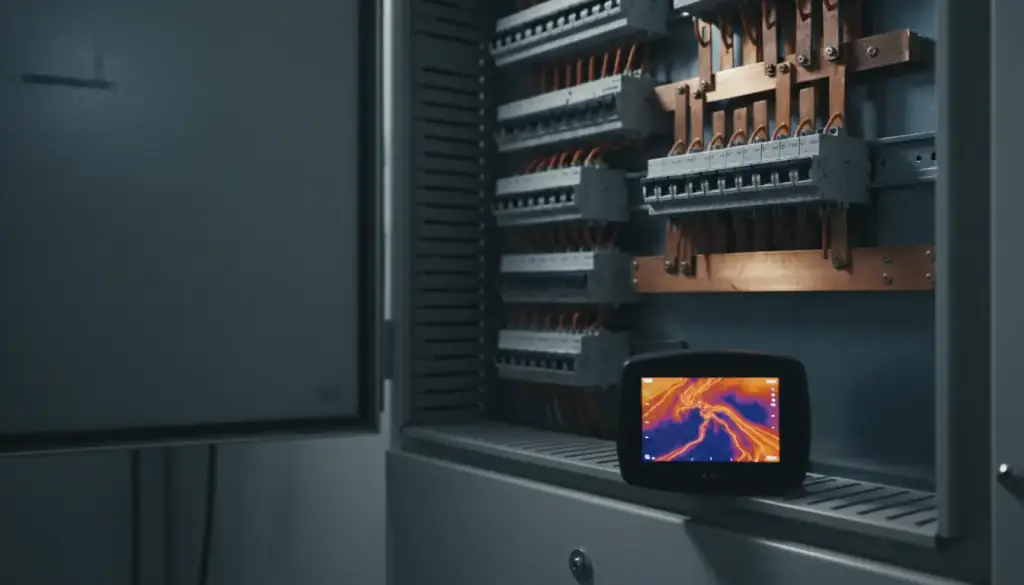
Electricity pushed through a poor connection turns some of its energy into heat. A thermal camera sees that heat as an image, so a technician can scan switchgear, panels, breakers, cables and terminations and pick out the ones running hotter than their neighbors. The building stays energized, and that is the whole point: the equipment has to be carrying load for the problem to show itself. No outage, no tenants sent home.
A scan commonly turns up things like these:
- A loose or corroded termination that is heating up.
- A breaker running noticeably hotter than the ones beside it.
- A circuit carrying more than it should, or an uneven split between phases.
- A fuse, lug or busbar joint that has started to deteriorate.
- A motor or drive running warm because of a bearing or ventilation problem.
A scan has limits. It shows surface temperature, not every kind of fault. Readings depend on how much load is on the equipment at that moment, so a quiet Sunday can hide a problem that appears on Tuesday afternoon. Shiny surfaces can mislead the camera. Comparing similar components side by side and scanning again over time is what makes the images meaningful. Opening live panels for a scan is also work for qualified people, not for a curious intern with a borrowed camera.
Turning findings into decisions
The picture is only the start. What helps an owner is a ranked list: what needs attention now, what can wait for the next planned shutdown, and what to keep watching. Without that, a thermal scan is a folder of colorful photos.
Specialized Maintenance Services (ESS) does both kinds of work on electrical and mechanical equipment in commercial and industrial buildings across Puerto Rico and the Caribbean. Its engineers and technicians use modern testing technology to inspect the condition of equipment and analyze what they collect. They then issue a complete report with findings and recommendations to help improve operations, reduce energy consumption and extend equipment life. Electronic records of each service are always available to the customer, so you can see how a machine has changed between inspections.
Ask yourself a plain question. If your main electrical panel were developing a hot connection today, how would you find out? If the honest answer is that you would find out when something trips, that is the case for a scan. The Electrical Systems service page has the details, and the 24/7 line is 787-944-3109.
Specialized Maintenance Services, 787-944-3109
Call 787-944-3109More articles
What a standby generator needs before hurricane season
Most storm-night generator failures are small, boring faults that a load test and a look at the transfer switch would have caught.
Fire pump and fire alarm faults that go unnoticed between inspections
Fire systems sit idle for months, so the faults that matter are the ones nobody sees until the day the system is called on.